This research examines how people and computational systems maintain useful working pictures of changing situations when observation is partial, delayed, missing, or unreliable.
The work is grounded in near-real-time environmental monitoring, with related applications in networked and security systems.
Richard Purcell · Dalhousie University
01
A working picture
A system does not see the whole situation. It receives observations of it.
A useful system still has to maintain a picture beyond what it can observe directly. The problem is that a complete-looking estimate can be built from incomplete evidence.
The field
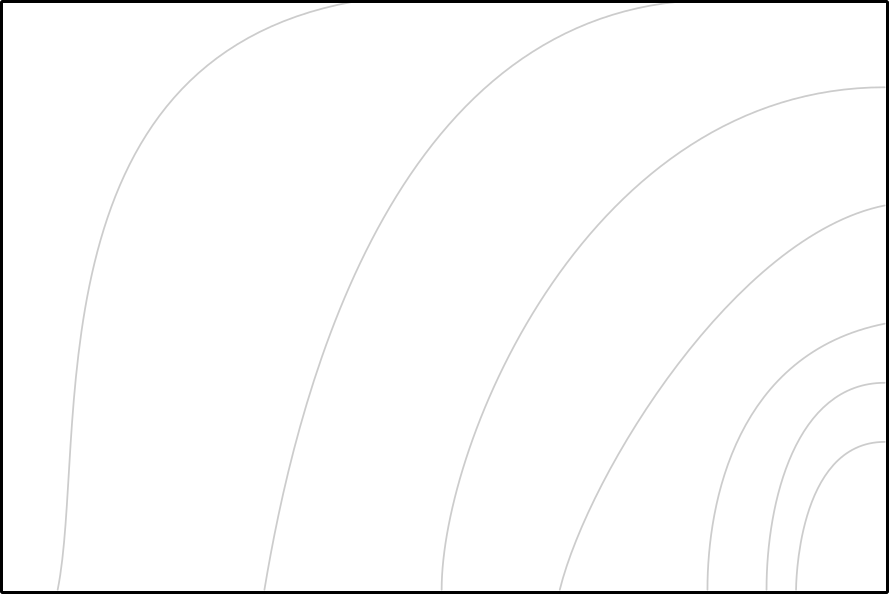
The terrain is known. The event itself has not yet been revealed.
A wildfire-like field is used here as a controlled explanatory example. The figure separates the event from the information available about it; it is not an operational wildfire map or fire-spread prediction.
02
Current research
When does arriving information remain useful?
The current research program investigates belief maintenance under partial and impaired adaptive sensing.
It examines where observations are collected, what reaches a monitor, what is lost, delayed, or unreliable, how the maintained picture changes, and whether measures of information delivery and maintained belief quality tell the same story.
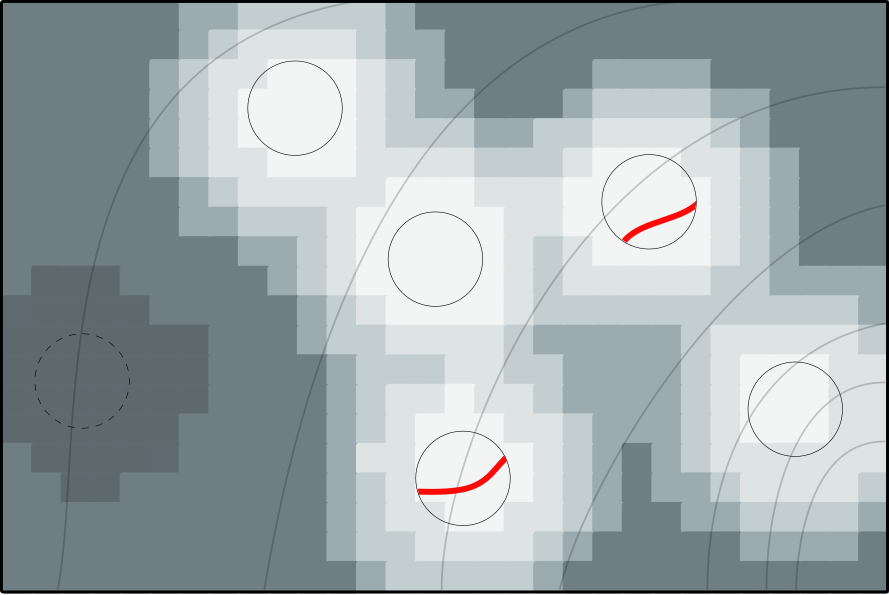
A working picture can weaken because an expected observation never arrives, because useful evidence becomes old while the situation changes, or because information arrives but is not reliable enough to support the picture strongly.
01 · loss / non-arrival
Missing
The requested observation never becomes usable evidence.
No observation is not the same as an observation of no event. The working picture should not gain support merely because the system intended to look there.
Look again, or use another source.
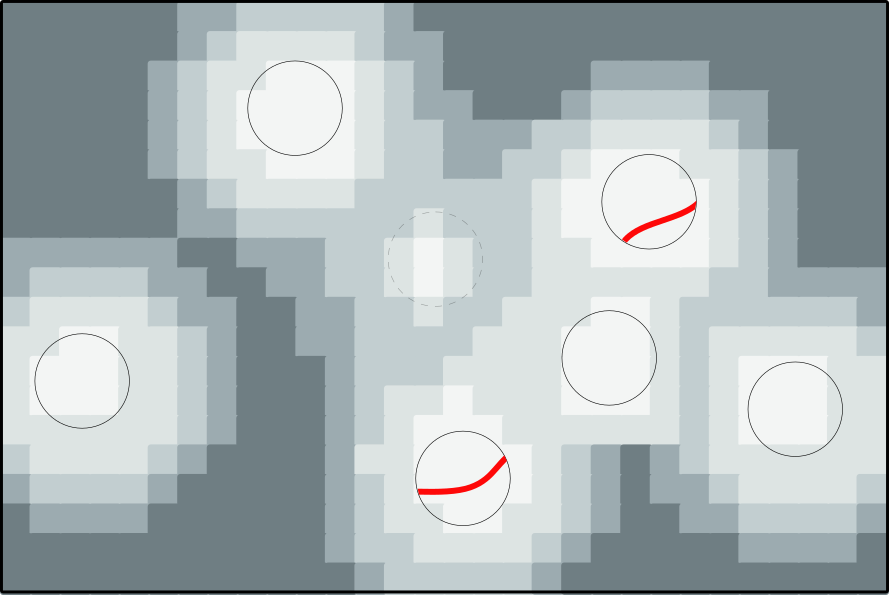
02 · delay / staleness
Old
Evidence can remain useful without describing now equally well.
An observation may have been valid when it arrived, yet deserve less support as the situation continues to change without another look.
Refresh or resynchronize.
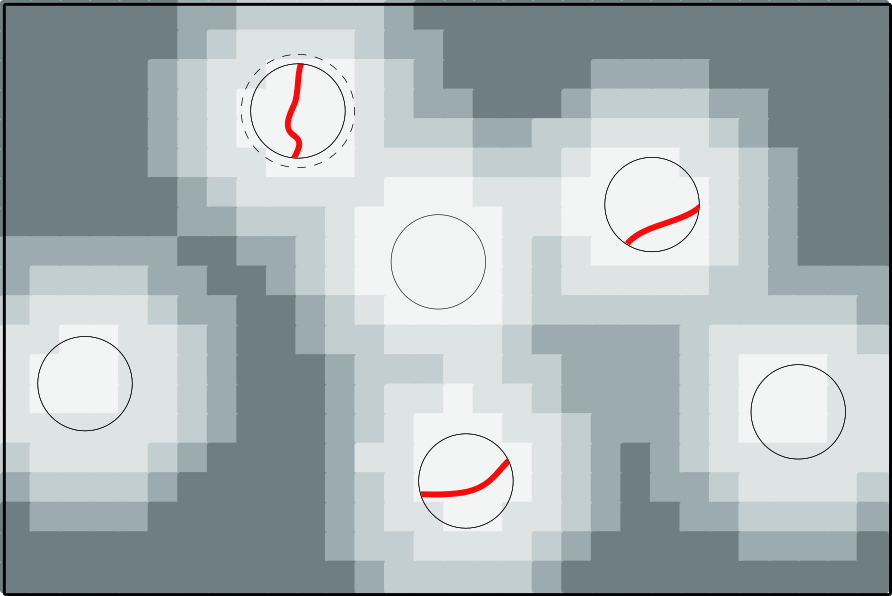
03 · noise / unreliable observation
Suspect
Arrival does not guarantee trust.
Information may be present but noisy, contradictory, poorly registered, or otherwise unreliable. Presence alone should not make the working picture appear well supported.
Verify or corroborate before relying.
Information arrival is not the same as evidence condition.
The three images continue the same controlled wildfire-like example. They translate loss, delay or staleness, and unreliable observation into ordinary-language evidence conditions rather than operational wildfire prescriptions.
04
Observation history
Different ways of looking produce different ways of knowing.
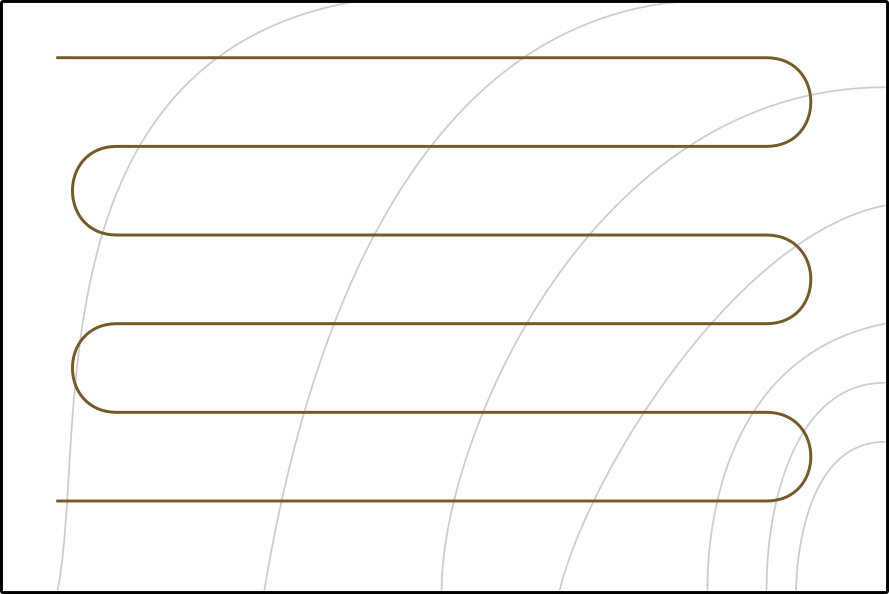
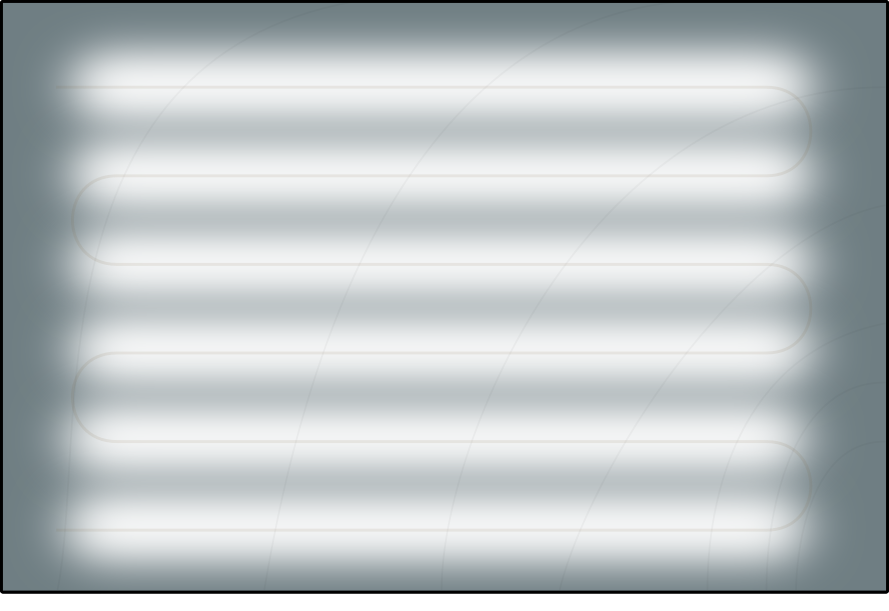
Even when observations arrive cleanly, the working picture is not supported evenly. Where a system looks, and where it looks again, determines which parts of the picture are refreshed and which depend more heavily on older evidence or inference.
Where it looks
Resulting support
Scanline
Repeated looking refreshes evidence along recurring bands. The support pattern records that repetition.
The maintained picture carries the history of where the system looked.
These prescribed geometries are controlled epistemic probes for studying support structure. They are not recommended wildfire flight paths or operational search policies.
05
From evidence to decision support
What the research shows, and where it points.
The current experiments establish a problem of evidence and maintained state. The next step is to ask how that evidence condition should inform attention, verification, and adaptive observation without turning uncertainty itself into an automatic command.
Supported by the current research
Information delivery and maintained picture quality can separate.
Observation geometry, evidence retention, loss, delay, and unreliable observations can change the support beneath a maintained picture. A system can remain active and continue receiving information while the quality of that maintained picture changes.
Evidence condition therefore deserves to be visible in its own right, rather than inferred from the apparent completeness of an estimate or the mere arrival of data.
Emerging research direction
Weak support can become a reason to look again — but not by itself.
01
Where is the picture weak?
02
Where does that weakness matter?
03
Can another observation still help?
The first question follows directly from the evidence-condition work. The second and third introduce context, consequence, feasibility, and time: necessary ingredients for deciding whether another observation is worth making.
This is a research direction. The current experiments do not validate incident-command decisions, evacuation choices, or complete operational retasking policies. The intended role is to make reasoning inspectable enough for a person to accept, modify, or reject a recommendation.
06
Continue into the research
The overview ends here. The detail branches.
The sections above establish the public argument. Deeper material can now be entered according to the question a visitor wants to pursue rather than by continuing one long linear page.
This overview remains the stable public entry point. Secondary pages can become more technical, historical, or documentary without forcing every visitor through the same depth.