01
Field + observation structure
The external field can evolve while sensing remains local and partial. What exists in the field and what is actually observed therefore remain different objects.
Adaptive Wildfire Sensing Research Tool
AWSRT addresses a methodological problem nested inside the larger research: how can a closed adaptive sensing loop be studied without collapsing the external field, observation, impairment, maintained belief, action, and evaluation into one system outcome?
It is a bounded experimental research instrument for making the relationships inside an adaptive sensing experiment controllable, visible, and auditable.
01
The methodological problem
The monitored field changes. Sensing is local and partial. Observations can be lost, delayed, or corrupted before they reach the monitor. Arriving evidence updates a maintained representation, and that representation can influence where sensing happens next. Movement, deployment geometry, and observation windows constrain what can actually be observed.
A change at one point in the loop can therefore alter what becomes possible or measurable later somewhere else.
Maintained belief feeds back into the next sensing action (Step 02). The experiment is therefore a closed loop, not a one-way data pipeline.
To study the loop, its parts must remain connected without becoming indistinguishable.
02
Research instrument
AWSRT provides one experimental environment in which the external field, local sensing, observation generation, communication impairment, monitor-available arrival, maintained belief, adaptive action, and evaluation can be varied while their roles remain explicit.
The instrument does not make a genuinely coupled system independent. It creates experimental separability: enough control and traceability to ask where a change occurred, what other parts of the loop it affected, and which evidence supports that interpretation.
Methodological role
Keep the sensing loop connected; keep its parts distinguishable. AWSRT makes that separation explicit enough to investigate.
03
Experimental control
Control does not mean making the sensing loop static or simple. It means that important conditions can be specified, varied, and traced instead of disappearing into a single outcome.
01
The external field can evolve while sensing remains local and partial. What exists in the field and what is actually observed therefore remain different objects.
02
Generated observations remain distinguishable from what becomes monitor-available after loss, delay, or noise.
03
Belief and uncertainty are maintained explicitly so that evidence arrival can be compared with what happens to the monitor's current representation.
04
Different sensing rules can act on the maintained state, allowing the consequences of adaptive observation to be studied inside the closed loop.
05
Movement constraints, deployment geometry, tie-breaking, sensor budget, origin, and observation windows remain part of the experimental condition rather than hidden implementation detail.
06
Timing, coverage, delivery, belief quality, diagnostic state, and effort can be examined separately while seeds, manifests, and run conditions preserve how a result was produced.
The objective is not to remove coupling. It is to make the coupling traceable enough to investigate.
04
Four methodological surfaces
The surfaces remain connected during a run. Their separation is methodological: each preserves a different question that would otherwise be easy to collapse into the others.
Surface here means a methodological view into the experiment, not simply a software screen.
01
External-field surface
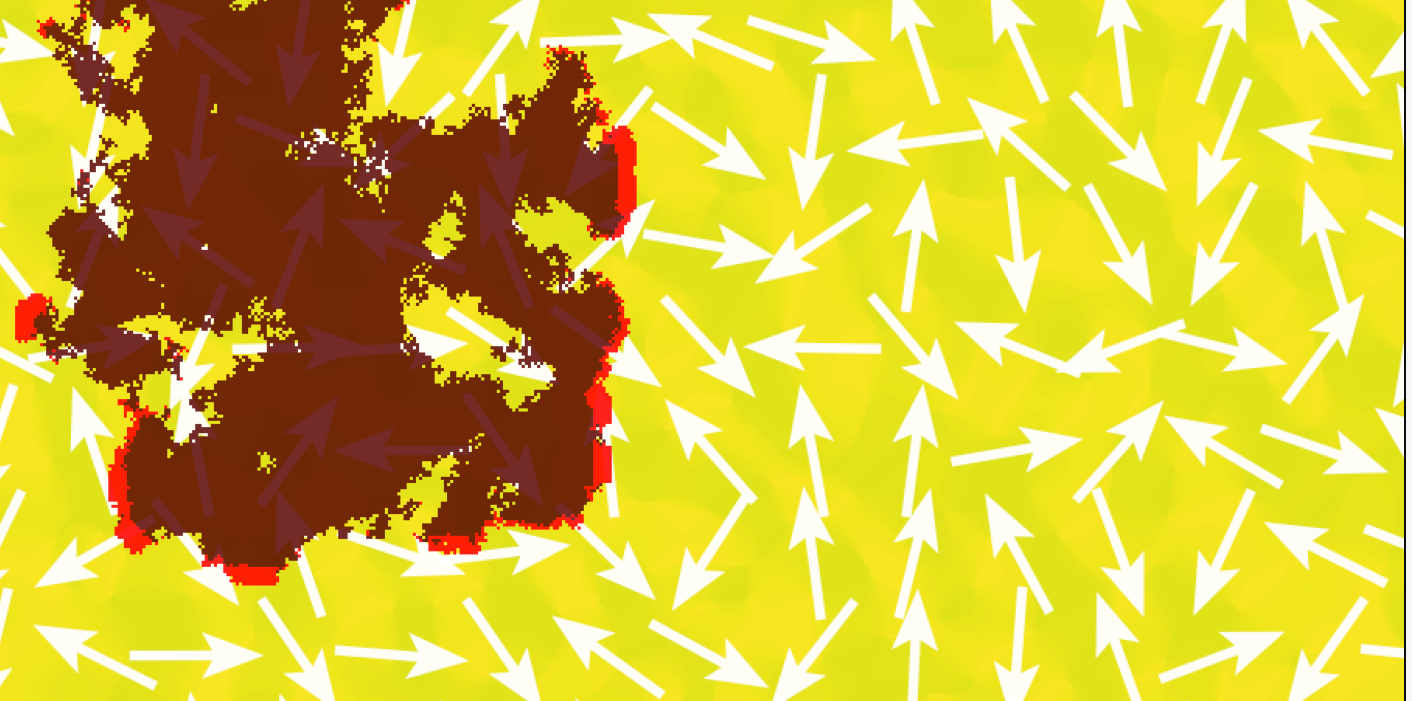
Provides synthetic or transformed wildfire-like dynamic fields as the evolving process to be monitored under controlled conditions.
The field is an experimental substrate, not a claim of complete wildfire physics.
02
Epistemic surface
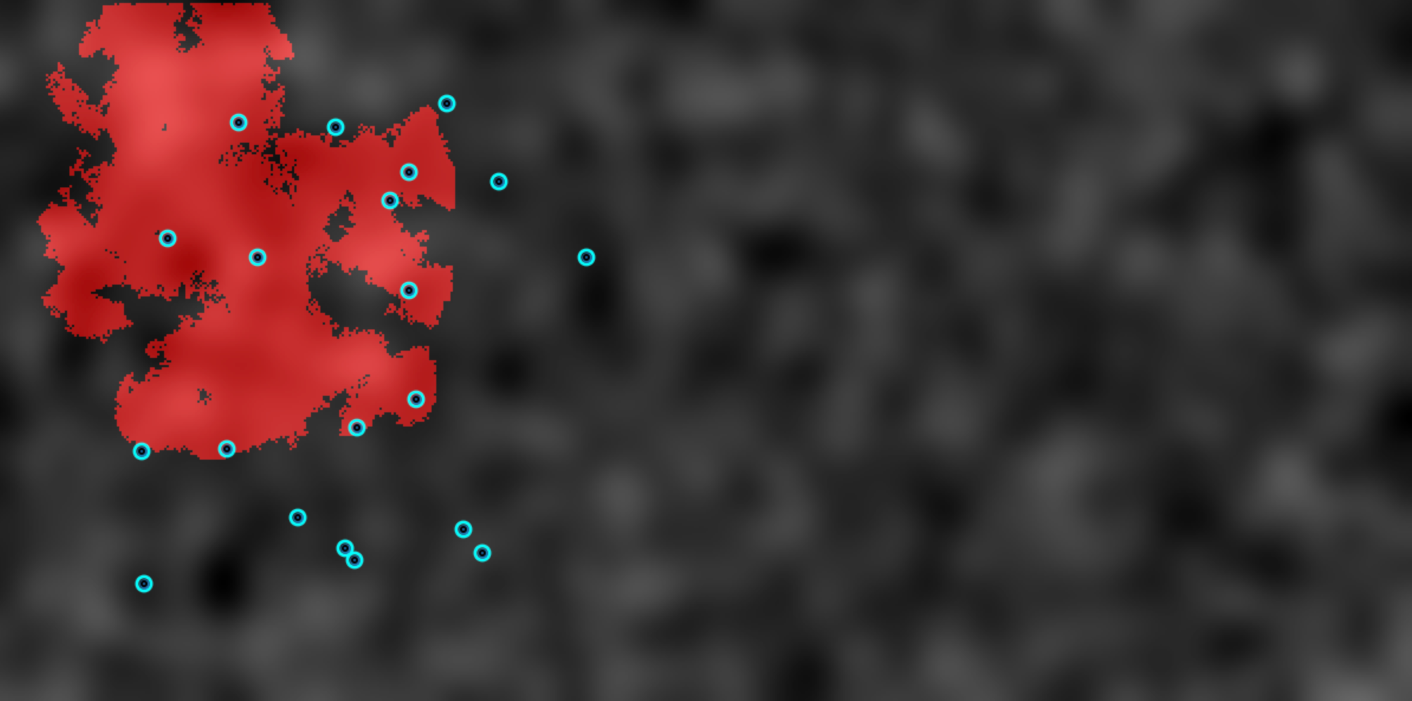
Maintains a probabilistic belief field and uncertainty summaries from the observations that actually become available to the monitor.
The maintained representation is not the external field itself.

03
Operational surface
Exposes sensing policy, sensor placement, deployment geometry, movement constraints, tie-breaking, impairments, and closed-loop run behaviour.
The intended sensing action is conditioned by what is feasible in the configured experiment.
04
Analysis surface
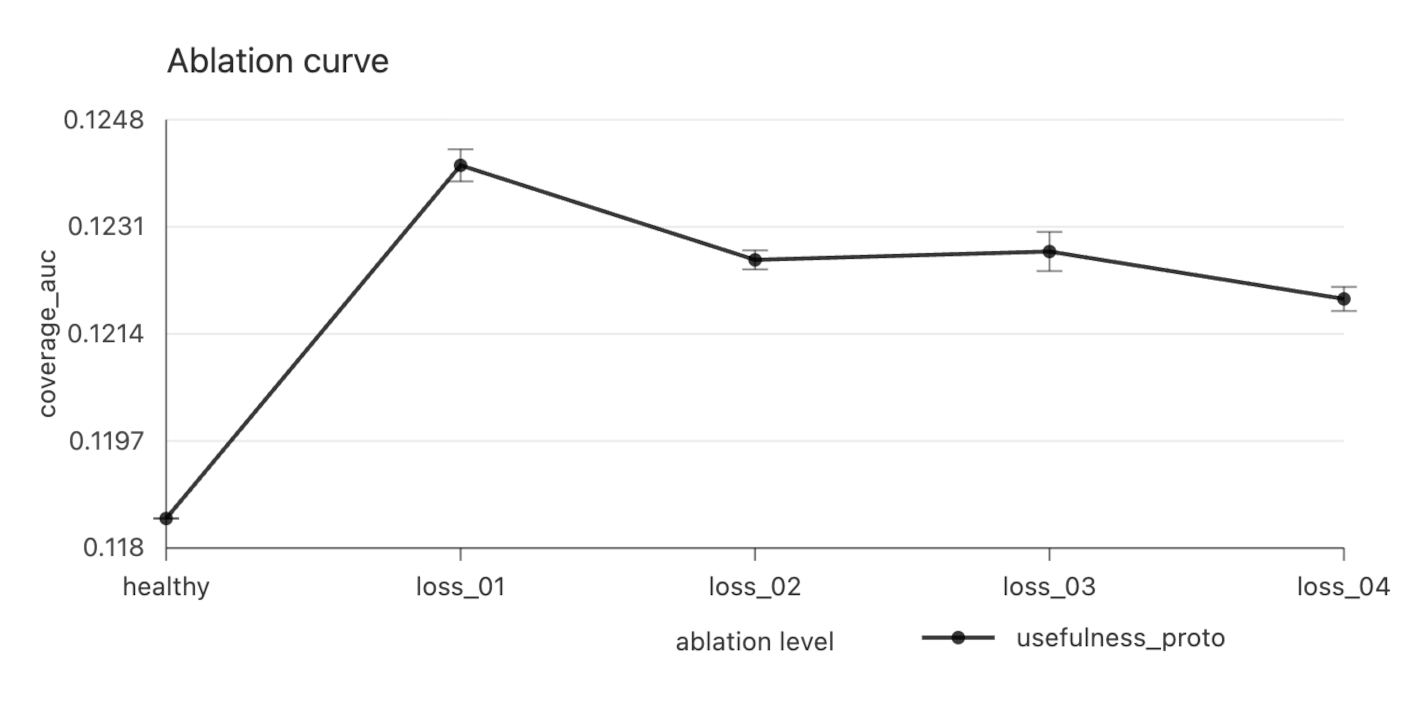
Preserves manifests, metrics, tables, figures, and comparison outputs so that timing, contact, delivery, belief quality, diagnostic state, and effort do not have to become one score.
The evidentiary force comes from recorded conditions and comparison artifacts, not from visual inspection alone.
The surfaces are linked, but they are not interchangeable. The external field is not the maintained belief; the belief is not the sensing rule; information arrival is not belief improvement; and one metric is not overall sensing performance.
05
Inside one step
The earlier loop shows why the experiment is closed. This view opens one pass through that loop so the causal order remains inspectable: belief informs an action, feasibility constrains it, sensing generates an observation, impairment conditions delivery, and arrived evidence updates belief.
01
The monitor begins with its current probabilistic representation and uncertainty.
02
The configured sensing rule selects where it would like to observe next.
03
Movement, geometry, deployment, budget, and the observation window determine what can actually occur.
04
Local sensing produces evidence about the part of the external field that is actually observed.
05
Loss, delay, or noise can change whether, when, or in what condition the observation becomes monitor-available.
06
What arrives is recorded as a monitor-available observation, distinct from what was originally generated.
07
The arrived evidence updates the maintained representation; metrics and traces record what changed.
Then the loop repeats. The updated belief becomes the starting point for the next sensing action.
06
What becomes inspectable
The instrument is useful scientifically because it preserves distinctions that a single success score or end-state map would otherwise hide.
Loss and delay can separate what sensing produced from what the monitor actually receives.
Evidence can arrive without being timely, reliable, spatially informative, or capable of reducing uncertainty in the maintained representation.
Contact with the field answers a different question from how informative the maintained representation remains over time.
Timing, contact, delivery, uncertainty, diagnostic state, and effort retain different meanings and should not be collapsed before the decision problem defines how they should be traded.
Scientific consequence
The instrument can show where two reasonable measures stop telling the same story. That is the experimental opening needed for the larger thesis question.
07
Checking the instrument
The relevant checks concern the instrument itself: whether configured mechanisms behave as declared, whether experimental conditions are preserved, and whether results can be traced back to what actually occurred.
01
Controlled cases are used to confirm that configured sensing, loss, delay, noise, belief updating, movement, and policy behaviour produce the intended experimental effects.
02
Expected qualitative behaviour is tested under deliberately simple conditions before more complex comparisons are interpreted.
03
Timing, contact, delivery, uncertainty, diagnostic state, and effort are checked according to their declared semantics rather than assumed to measure the same thing.
04
Seeds, field artifacts, geometry, observation windows, impairment settings, policies, and other structural conditions are retained with the experiment.
05
Manifests, tables, figures, and supporting repositories preserve enough of the experimental record for results to be reconstructed and audited.
What this establishes
The instrument can be checked for the distinctions and mechanisms it is designed to expose.
What this does not establish
It does not validate AWSRT as a physically complete wildfire model or as an operational wildfire-response system.
Research-instrument verification and wildfire-model validation are different questions.
08
Scope boundary
Its value comes from making a particular information problem experimentally inspectable. That does not require the instrument to claim physical, operational, or decision-complete realism.
AWSRT does not recommend incident-command actions, evacuation decisions, procurement choices, or complete real-world sensing strategies.
Wildfire-like fields provide structured experimental substrates; they are not presented as validated reconstructions of wildfire physics.
The instrument is not intended to mirror a specific fire, sensor fleet, communications network, or operational environment with full fidelity.
The included sensing policies are research probes. Results are conditioned by field structure, geometry, constraints, windows, and the declared experimental configuration.
The boundary is part of the method: AWSRT trades physical completeness for experimental separability, traceability, and auditability.
09
Scientific role
Once field, observation, arrival, belief, action, and evaluation can be kept distinct, a larger scientific question becomes experimentally accessible.
Methodological problem
How can adaptive sensing be controlled and inspected without collapsing field, observation, belief, impairment, and action?
AWSRT
Scientific problem
Once those objects are separable, when does information that reaches the monitor actually improve the maintained representation?
AWSRT is therefore more than software used to run the experiments. It solves an enabling methodological research problem nested inside the larger scientific thesis.